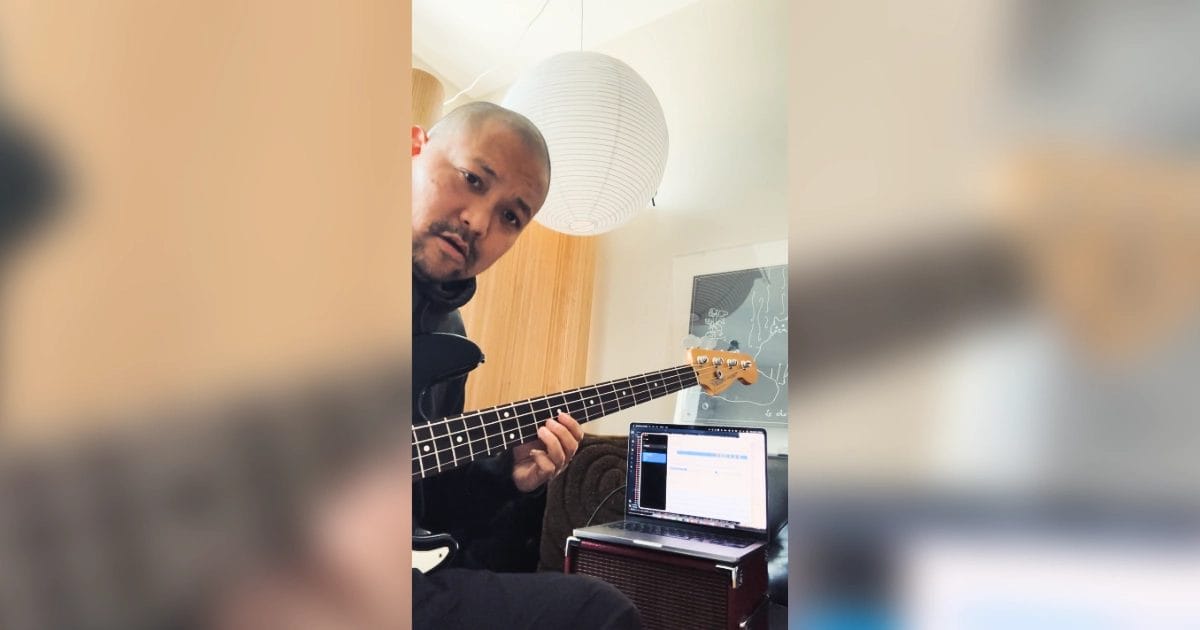
There are 12 seconds of Doreen Ketchens playing “When The Saints Go Marching In” that I’ve had on loop for the past 20 minutes.
I wasn’t planning to transcribe anything today. But here we are.
Her phrasing sounds like a bird chirping — light, natural, deceptively hard to play. The way she places her embellishments makes every line sing. I was lucky enough to catch her live in New Orleans once. Never heard anyone swing like that.
And it’s moments like this that keep pulling me back to my bass.
If you’ve been away from playing for a while, this article is about that pull — and how to use it to actually get back into it… and STAY with it.
(If you want the full picture first, start here: What Losing Your Music Feels Like)
Why Getting Back Into Music Feels So Hard
If you’ve been away from your instrument, you already know:
Life happened.
It could’ve been your career, family, responsibilities. Either way, time disappeared.
And even if you still think of yourself as a musician… actually picking up your instrument again feels different.
Heavier.
Not physically — the other way.
The longer the gap, the harder it is to start.
Which is why most advice doesn’t work.
The Problem With Traditional Practice Advice
When you search “how to get back into bass”, you’ll usually hear:
- Start slow
- Practice scales
- Rebuild technique
- Work through fundamentals
- Transcribe “essential” solos
And don’t get me wrong, none of that is bad.
But it misses something critical: It assumes motivation will come after you start.
In reality, it’s the opposite.
You don’t start because you’re motivated. You get motivated because something pulls you in.
Why Transcribing “Important” or “Must-Know” Music Often Fails
A few years ago, I tried to get serious about transcription.
I picked a solo by Miles Davis — something I had been told was essential.
So I did the work:
- slowed it down
- picked out phrases
- wrote it out
Technically, I was doing everything right.
But something was missing.
- No pull.
- No curiosity.
- No reason to stay with it.
- I honestly didn’t care for it.
I sill learned the solo that day.
But within a few days, it was gone.
Like, I didn’t remember a single phrase.
Here’s what I understand now
I transcribed music I respected — but didn’t necessarily feel from an emotional level.
Respect is not enough to make something stick. You gotta’ feel it from a deep emotional level in order to care for something long enough for it to stick.
Start With Real Music (Not Exercises)
If you’re trying to get back into bass, this is the most important shift:
Start with music that actually moves you. Music that you actually like.
Not:
- exercises
- routines
- “important” or “must-know” solos
But something that makes you stop and replay it.
The 12-Second Rule
When I heard those 12 seconds of Doreen Ketchens, I wasn’t thinking about practice.
I just needed to understand it.
That’s the signal.
If you replay something without thinking — that’s what you should learn.
Not because it’s easy. Not because it’s correct. But because it pulled you in.
Why This Works (And Sticks)
When music moves you:
- You listen more
- You stay longer
- You notice details
- You absorb feel, not just notes
You start internalizing:
- phrasing
- rhythm
- timing
- articulation
All the things that don’t come from exercises.
That’s why 12 seconds of the right music beats 30 minutes of the wrong practice.
How to Start Playing Bass Again (Step-by-Step)
If you’ve been away and don’t know where to begin, do this:
1) Find Your “12 Seconds”
Scroll, listen, explore.
When something makes you:
- stop
- replay
- lean in
That’s your starting point.
Not your instrument. Not your genre.
Just something that hits.
2) Loop It (Don’t Rush It)
Before you touch your bass:
- listen repeatedly
- feel the rhythm
- notice where it breathes
Let your ear grab the shape first.
3) Sing It, BEFORE touching your bass
If you can’t sing it, you don’t have it yet.
But singing like a singer isn’t the point. Just try to emulate the sound with your voice. Because this is the first-step toward internalizing a sound BEFORE you get caught up with the mechanics of it all on your bass.
Singing = internalizing.
4) Find It on Your Instrument
Now translate it:
- don’t aim for perfection
- aim for the feel
- try to catch the contour of the phrase
- get close enough to recognize it
This is where the connection starts coming back.
5) Keep It Short
A few seconds is enough.
Seriously.
One phrase you own is more valuable than a full song you barely remember.
Why Most Musicians Get Stuck (And Stay Stuck)
Most players try to come back by:
- doing what they think they should practice
- forcing discipline before interest
- starting too big
That creates friction.
And friction kills consistency.
And when you’re much older and have a lot going on in life already, the last you need is more friction.
The Real Shortcut Back to Playing
The fastest way to get back into bass isn’t:
- more structure
- more theory
- more exercises
It’s this:
Follow what you can’t stop listening to.
Your taste isn’t a distraction.
It’s the engine.
Where Music Phrase Pyramids Fits In
This exact process — looping, isolating, working small phrases — is what I built Music Phrase Pyramids around.
Because the biggest problem isn’t knowing what to do.
It’s removing the friction between:
- hearing something
- isolating it
- actually practicing it
If you’ve ever tried to loop a tiny phrase manually… you already know how clunky that gets.
MPP just makes this process instant:
- capture audio from anywhere
- split it into chunks
- loop exactly what you need
- stack phrases so they stick
No files. No setup. No friction.
The Fastest Way Back to Bass
If you’ve been away from your instrument, start here:
Not with discipline. Not with a plan. But with one moment of music that pulls you back in.
For me, it continues to be musicians like Doreen Ketchens playing the clarinet on a street corner.
For you, it might be something completely different.
But you’ll know it when you hear it.
Because you’ll hit replay… and not want to stop.
Ready to Go Deeper?
This article expands on Step 1 from my pillar guide:
What Losing Your Music Feels Like (And How to Get It Back)
If you’re navigating a longer break from playing, that’s the full roadmap.

Put This Into Practice
If you want to actually close the gap between what you hear and what you can play, you need a way to work with real musical phrases — not just concepts.
Music Phrase Pyramids is a tool I built to help with that.
It lets you take any audio and break it into progressive steps, so you can internalize, map, and build phrases in a structured way.