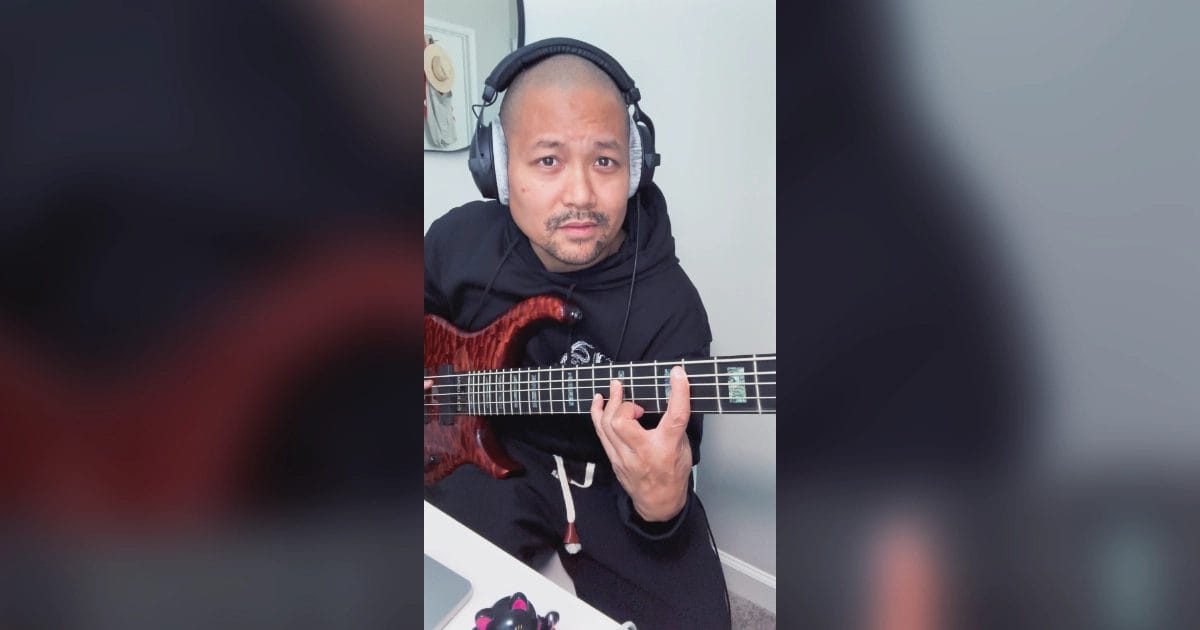
The Diminished Chord Is a Magnet for Resolution

Posido Vega - Diminished Chord Resolutions
Share

For the longest time, I avoided the diminished chord.

It just sounded… strange. Mysterious. Almost like it didn’t belong anywhere.

Whenever I played it on the bass or guitar, I couldn’t figure out what emotion it was trying to express. It wasn’t happy or sad—it was suspended somewhere in between, hanging in midair. So, I treated it like a theory term I’d heard about but never really felt.

Years later, I stumbled across a Barry Harris video that completely changed that. Within minutes, I realized the diminished chord wasn’t a mystery at all—it was a magnet.

In a nutshell… It wasn’t meant to stay put; it was built to move.

Every note inside it wanted to go somewhere—to resolve.

And once I started hearing that, my ears opened up. I could literally feel the pull of the diminished chord leading into a major or minor tonic. It was harmonic gravity.

Every note in this chord pulls somewhere

Hearing the Pull — Why the Diminished Chord Feels Unstable

Here’s what I eventually learned: the reason the diminished chord feels so unstable is because it’s perfectly symmetrical.

Take F# diminished (F#–A–C–Eb), for example. Each note is a minor third apart, which means if you move that shape up or down a minor third, it’s technically the same chord. That symmetry creates a kind of floating tension—it has no “home” on its own.

But that’s where the magic begins.

Every note in a diminished seventh chord acts as a leading tone—it wants to move up a half-step to find resolution.

Even cooler, that same note can also resolve down a whole-step to become the root of another tonic.

That means you get eight possible destinations from one diminished chord: four major tonics and four minor tonics.

In the case of F#°7 (F#–A–C–Eb), that gives you these options:

  • Up a half-step → G major (or minor), Bb major (or minor), Db major (or minor), or E major (or minor)
    • F# -> G
    • A -> Bb
    • C -> Db
    • Eb -> E
  • Down a whole-step → E major (or minor), G major (or minor), Bb major (or minor), or Db major (or minor)
    • F# -> E
    • A -> G
    • C -> Bb
    • Eb -> Db

Eight possible tonal centers—all connected by one symmetrical shape.

It’s not random—it’s voice leading in motion.

The Demonstration — The F#°7 Gravity Test

Let’s walk through what I show in my YouTube Shorts video step by step.

Step 1: Start with F#°7 (F#–A–C–Eb)

When you play it, listen to how each note seems to be leaning forward. It’s like every tone is saying, “Take me somewhere.” That tension is what gives the diminished chord its color and depth.

Step 2: Resolve Each Note Up a Half-Step

Now move each note up a semitone:

  • F# -> G major
  • A -> Bb major
  • C -> Db major
  • Eb -> E major

Note: In the video I only demonstrate resolving to a major tonic. Be sure to explore resolving to a minor tonic.

Suddenly, what felt “mysterious” lands beautifully. Each of those resolutions feels like a small sigh of relief. That’s tonic resolution.

This is the ear’s logic behind why the diminished chord resolution feels inevitable. It’s just voice leading doing its natural job.

Step 3: Play a Melodic Line Over F#°7

Next, I take a simple line built from that same F# diminished arpeggio. Even when I move through notes freely, the ear still hears the pull toward those same tonic chords.

That’s because the line inherits the chord’s leading-tone function—every motion contains built-in chromatic approach tones that guide your ear to resolution.

It’s not about scales or memorization. It’s about hearing tension and release in real time.

Step 4: Add the Target Root for Modern Voicings

Now comes my favorite part.

If you take that same F# diminished chord and add the root of your target chord underneath, you get these lush, modern colors:

  • F#°7 / G
  • F#°7 / Bb
  • F#°7 / Db
  • F#°7 / E

My personal favorite is F#°7 / Bb—it’s got that haunting, cinematic pull that feels like it could live in a film score.

I honestly don’t even try to decipher what chords these are. I simply enjoy their sound!

When you hear it, you’re hearing reharmonization in action: a hybrid sound that bridges tension and release.

Beyond the Exercise — Turning Tension Into Expression

Once you hear this magnetic pull, the possibilities start multiplying.

1) Passing Chords

This first application is found in a lot of jazz standards and the diminished chord is even used to imply a dominant VI chord leading to the ii chord.

Here’s what it looks like. You’re basically using the diminished chord as a chromatic connector between two tonal centers.

Example: Cmaj7 -> C#°7 -> Dm7

That tiny half-step motion creates beautiful voice leading while keeping the listener engaged.

2) Improvisation

Think of the diminished arpeggio as a mini-palette of approach tones. Any melodic idea drawn from it naturally resolves because it’s built on tension-and-release architecture. This is the super-power of this chord! Here’s how I think of it and apply it: Focus on the target chord, then improvise lines from the related diminished, then resolve your lines to your target chord.

3) Composition & Arrangement

Want to shift keys smoothly? A diminished chord can also be used as modulation bridge.

Because of its symmetry, you can slip into new tonal centers without harsh transitions—just follow the gravity of the notes.
So say you want to modulate from the key of C major to the key of A major, you can use sounds from a B diminished to blend into the new key of A major.

The Emotional Resolution — Why It Feels So Good

Once I started hearing the diminished chord as movement, not mystery, something shifted in my playing.

It became less about memorizing theory and more about listening to what the harmony wanted.

Every time I landed on a tonic, it felt like the music took a breath.

That’s what makes diminished chord resolution so satisfying: it mirrors life.
Tension, anticipation, release. Conflict, motion, arrival.

And the best part? Once your ear locks into that pattern, you stop overthinking. You just follow the gravity.

Takeaways — Your New Lens on Diminished Chords

  • A diminished chord isn’t a dead end; it’s a crossroad.
  • Each note can resolve up a half-step or down a whole-step.
  • From one shape, you get 4 major and 4 minor tonal options.
  • Add the target root underneath for lush, expressive voicings.
  • Once you hear the magnet, you’ll never play a diminished chord the same way again.

If this diminished insight clicked, my Jazz Harmony & Shapes hub will show you even more ways to use tension to pull the listener exactly where you want.

Frequently Asked Questions

Why does a diminished chord sound unstable?

A diminished seventh chord is perfectly symmetrical—every note is a minor third apart. That symmetry removes any natural tonal “home,” making the chord feel suspended and unstable. This built-in tension is why diminished chords crave resolution.

How many tonal centers can one diminished chord resolve to?

Each note can resolve up a half-step or down a whole step, creating eight possible destinations: four major and four minor tonal centers. This makes diminished chords powerful harmonic connectors.

How do diminished chords function in jazz improvisation?

Improvisers treat diminished arpeggios as a palette of built-in approach tones. Any line built from a diminished chord naturally creates tension that resolves smoothly into a major or minor chord — ideal for outlining chromatic movement.

What are common uses of diminished chords in progressions?

Jazz standards often use diminished chords as passing chords (e.g., Cmaj7 → C#°7 → Dm7), as dominant substitutes, or as key-modulation bridges due to their flexible voice leading.

What does adding the target root under a diminished chord do?

Adding the target chord’s root beneath a diminished chord creates lush, modern hybrid voicings (e.g., F#°7 over Bb). These sounds blend tension and resolution and are widely used in contemporary harmony.

Internet Archive (Wayback Machine)

The Internet Archive for Musicians: A Hidden Goldmine of Rare Recordings to Inspire Your Practice

Prev
Posido Vega - Trying on flatwounds on my P-Bass

Flatwound vs. Roundwound Strings on a P-Bass: My Honest Take After 20+ Years of Playing

Next