


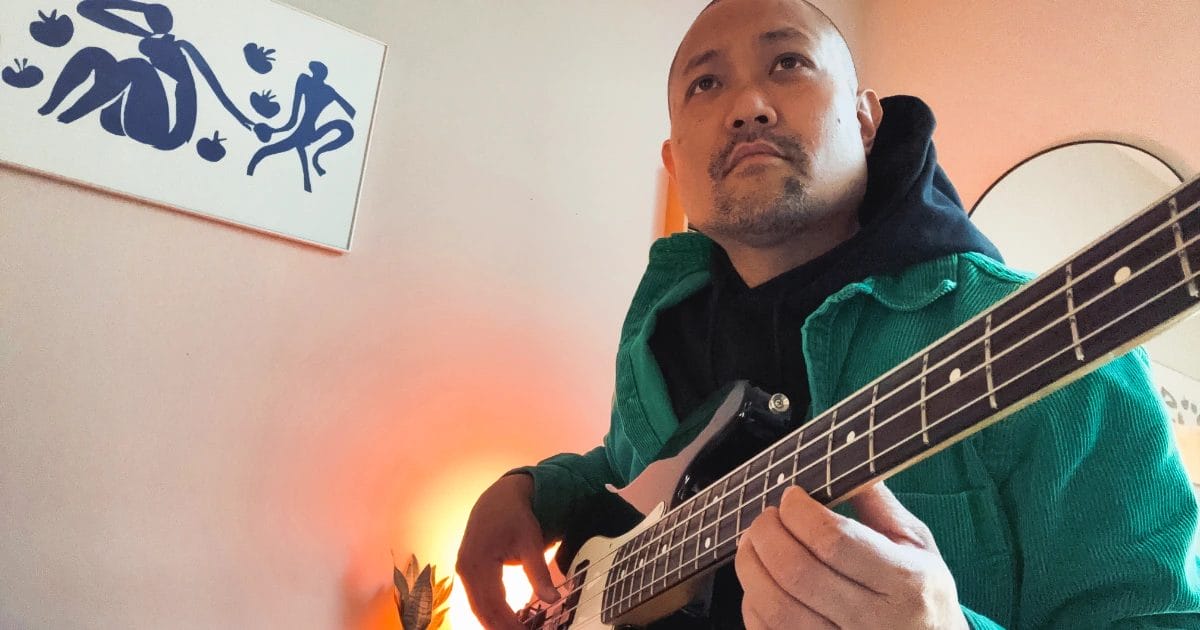

There’s a version of you that played bass every day.
Maybe it was rehearsals in someone’s garage. Late nights at clubs. Or maybe it was quieter—just you, your instrument, and an hour carved out of the evening.
Either way, that version of you existed.
And at some point, without any big decision, it got harder to find him.
If you’re trying to get back into playing bass after years away, this is the part no one really explains:
You didn’t lose your musicianship.
You lost access to it.
And those are two very different problems.
How You Drift Away From Playing (Without Realizing It)
In 2014, I took a job in IT.
I needed stability. I’d been playing professionally for nearly two decades, and the physical strain had caught up with me—tendonitis that made me reconsider everything.
The money was better. So I took the job.
At first, it felt temporary. I’d practice on weekends. Make up for lost time.
But I was on-call every week.
Interruptions became the rhythm of my life.
You know the story about the frog in slowly boiling water?
That was me.
I didn’t make one decision to stop playing bass. I made a thousand small ones.
Skip practice. Work late. Try again tomorrow.
Five years later, I had barely touched the instrument.
That realization didn’t arrive loudly. It was quiet. Almost embarrassingly quiet.
The thing I’d done every single day of my adult life had just… stopped. And I hadn’t even noticed it happening.
What It Actually Feels Like to Come Back
When I finally picked the bass back up, I expected it to feel natural again.
It didn’t.
Instead, my hands felt slow. Weak. Unreliable.
Things I used to play without thinking—phrases that used to live in my fingers—felt foreign.
If you’ve experienced this, you’ve probably thought:
- “I lost my chops.”
- “I’m not as good as I used to be.”
- “Maybe I just don’t have it anymore.”
But here’s what’s really happening:
Your ear is still intact. Your access is not.
You still:
- recognize good phrasing
- hear when something is off
- remember how music should feel
But your ability to execute what you hear is disconnected.
That gap—between your ear and your hands—is the real problem.
Not talent. Not potential.
Access.
The Moment That Changed Everything
When my daughter was born, I barely played at all.
She didn’t sleep. I didn’t sleep. Music disappeared.
When things settled down, I started sneaking in time in the middle of the night, while everyone else slept.
But something unexpected was also happening during the day.
I’d notice her walk over to a small keyboard and just… play.
No frustration. No rules. No hesitation.
She’d also hear a melody once and sing it back accurately. And sometimes when I would play music with her, she’d call out any wrong notes immediately.
And here’s the thing: No theory. No training. Just her ear.
That’s when it clicked:
This is how music is actually learned.
Ear first. Everything else second.
And I also realized something else: Even when I was playing at my best years ago… my approach wasn’t fully right.
I had technique. I had knowledge. But I wasn’t always playing from what I heard. I was often playing what I thought.
This time, I wanted it to be different.
Why Playing Bass Feels Harder After a Break
If you’re trying to get back into bass after years away, here’s what no one tells you:
The problem is physical—but the frustration is mental.
You’ve lost:
- finger strength
- calluses
- stamina
- accuracy
- execution speed
But you haven’t lost:
- your ear
- your musical taste
- your internal sense of phrasing
So what happens?
You hear a phrase you’ve played a hundred times and you reach for it. But it’s not there. Instead, your hand goes to the close spot, and the execution is clumsy. Your fingers also move like molasses.
And that’s the part that can be really tough. Because you know exactly what it’s supposed to sound like. But you just can’t get there yet.
That disconnect is enough to make people quit again.
The Real Goal: Rebuilding Access
Most advice tells you to:
- practice scales
- rebuild technique
- run exercises
That’s not wrong.
But it misses the point.
The goal is not just to “get better.”
The goal is to: reconnect what you hear… to what you can play
That’s access.
And the fastest way to rebuild it isn’t through isolated drills.
It’s through phrases.
How to Get Back Into Playing Bass (Without Burning Out Again)
If you’re returning after a long break, here’s a better way to approach it:
1. Start with real music (not exercises)
Your ear needs something meaningful to chase, not abstract patterns.
2. Work in small phrases
Don’t try to relearn entire songs at once.
Take short musical ideas:
- 2–5 notes
- one small phrase