


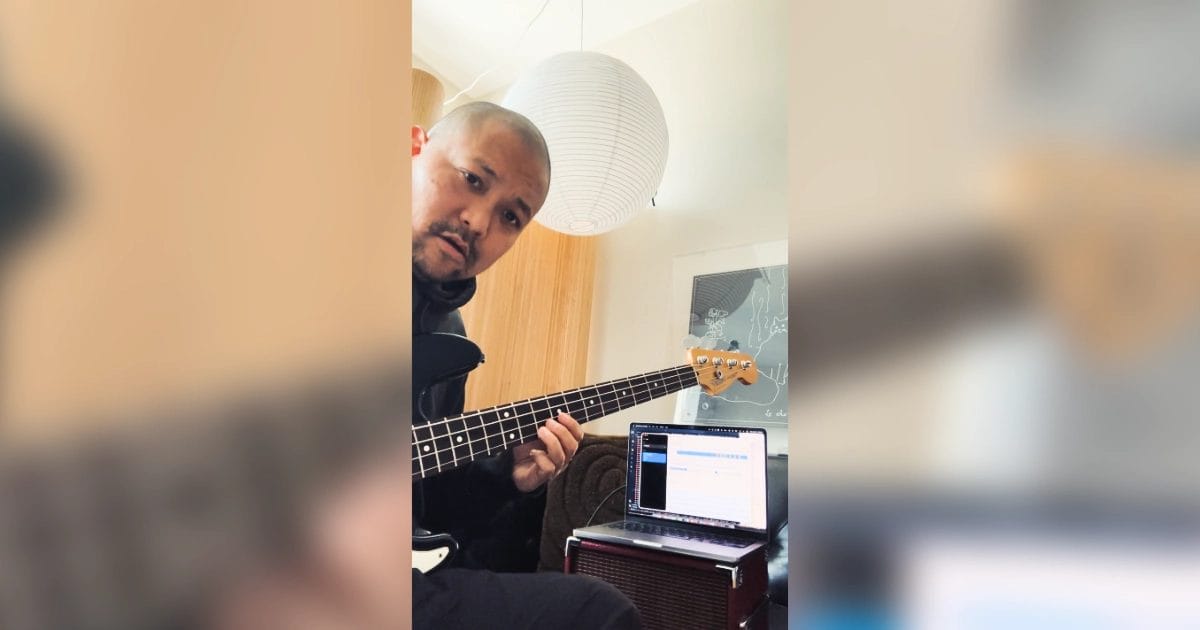

There are 12 seconds of Doreen Ketchens playing “When The Saints Go Marching In” that I’ve had on loop for the past 20 minutes.
I wasn’t planning to transcribe anything today. But here we are.
Her phrasing sounds like a bird chirping — light, natural, deceptively hard to play. The way she places her embellishments makes every line sing. I was lucky enough to catch her live in New Orleans once. Never heard anyone swing like that.
And it’s moments like this that keep pulling me back to my bass.
If you’ve been away from playing for a while, this article is about that pull — and how to use it to actually get back into it… and STAY with it.
(If you want the full picture first, start here: What Losing Your Music Feels Like)
Why Getting Back Into Music Feels So Hard
If you’ve been away from your instrument, you already know:
Life happened.
It could’ve been your career, family, responsibilities. Either way, time disappeared.
And even if you still think of yourself as a musician… actually picking up your instrument again feels different.
Heavier.
Not physically — the other way.
The longer the gap, the harder it is to start.
Which is why most advice doesn’t work.
The Problem With Traditional Practice Advice
When you search “how to get back into bass”, you’ll usually hear:
- Start slow
- Practice scales
- Rebuild technique
- Work through fundamentals
- Transcribe “essential” solos
And don’t get me wrong, none of that is bad.
But it misses something critical: It assumes motivation will come after you start.
In reality, it’s the opposite.
You don’t start because youâ€